In healthcare, a missing record isn't an inconvenience. It's a risk.
Healthcare apps carry an unusual design burden: the stakes of getting it wrong are rarely just inconvenient. This was a full redesign of an existing healthcare platform serving two very different groups: patients managing their own health journeys, and the clinical professionals responsible for their care.
The challenge wasn't only usability. It was designing one product coherent enough to serve both, without giving up the efficiency professionals depend on or the clarity patients need.
3-in-1One login, a tailored product each for patients, hospitals and labs
100%Of records verified before they enter the system, by design
The problem
Medical records are fragile by design: physically misplaced, damaged over time, inconsistent across providers. For patients, critical information goes missing exactly when it matters most: emergencies, referrals, a move between hospitals. For clinicians, it means time lost chasing records instead of treating people.
Home city New city?The records stay behindThe history never arrives
A patient moves to another city. Their records stay locked at the old hospital, and the doctor in the new city receives none of their history.
Research
Out in real hospitals, with the people on both sides of the record.
A research-heavy project: surveys, interviews, contextual inquiry and card sorting, with primary research in real hospital settings.
Primary research
01What the surveys said
Patients
88.7%Want it digitalWould rather keep their records on a digital platform
71%Access mattersSay easy access to their records is very important
51.6%Keep family's tooAlso keep records for family members
40.3%Couldn't find themHave had trouble reaching their records when they needed them
Doctors
85.7%Paper + digitalKeep patient records both on paper and digitally
71.4%Want it digitalWould manage patient data on a digital platform
57.1%Patients locked outSay their patients can't access their own records
35.7%Access is hardRate patient access to records as difficult
Privacy limits: Security and confidentiality constraints
Secondary research
04What 8 papers on electronic records say
Worth itSafer careFewer repeat testsLives savedAccess anywhere In the wayHigh costsHardware failuresUnauthorised accessDisrupted workflows
Why it's worth it: Safer care, Fewer repeat tests, Lives saved, Access anywhere. What gets in the way: High costs, Hardware failures, Unauthorised access, Disrupted workflows. The benefits outweigh the hurdles.
Synthesis
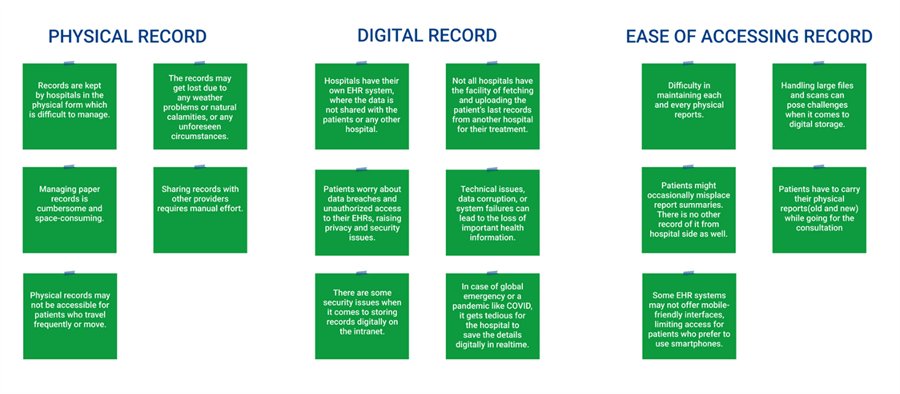
05Affinity mapping
Everything we heard and read, sorted into three themes.
Physical records
Hospitals keep paper records that are hard to manage
Records get lost to weather, disasters or accidents
Paper is cumbersome and takes up space
Sharing with other providers is manual
Out of reach for patients who travel or move
Digital records
Each hospital's records stay in its own system
Few hospitals can fetch records from another
Patients worry about breaches and unauthorised access
Technical issues and corrupted data lose records
In emergencies like COVID, saving details in real time is tedious
Ease of access
Hard to keep track of every physical report
Large scans are hard to store digitally
Lost summaries with no copy at the hospital
Patients carry piles of old reports to each visit
Many record systems are not mobile-friendly
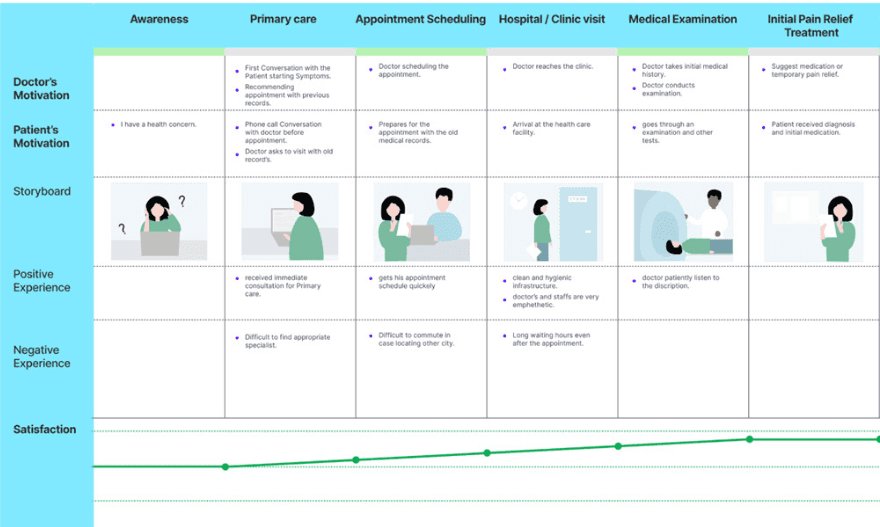
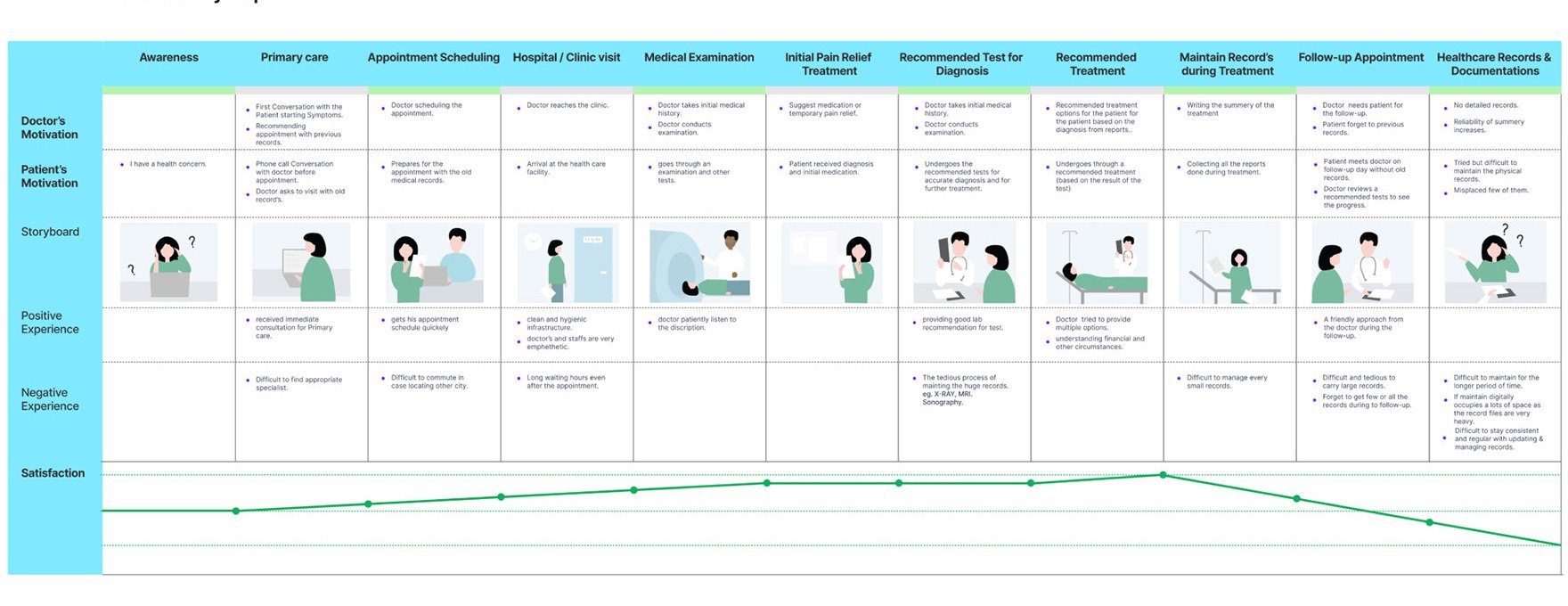
06The patient's journey
Care gets better at every step. Then the records have to last, and that's where it falls apart.
Where it drops
Hard and tedious to carry large records to follow-ups
Forgetting some, or all, of them along the way
Paper is hard to keep for years; digital files grow heavy
See the full journey map
The core problem
The core problem wasn't storage. It was reliability: making sure the right information exists, in the right form, at the right moment.
Solution
One system. Two experiences. Zero compromise on either.
A unified, role-based health records portal: one platform through which patients and clinical professionals access and manage medical information from anywhere.
Rather than separate products for each group, the experience adapts by role: patients see a clear, personal view of their health journey, while professionals get the clinical depth and efficiency they need.
One login, three products
Login
Patient
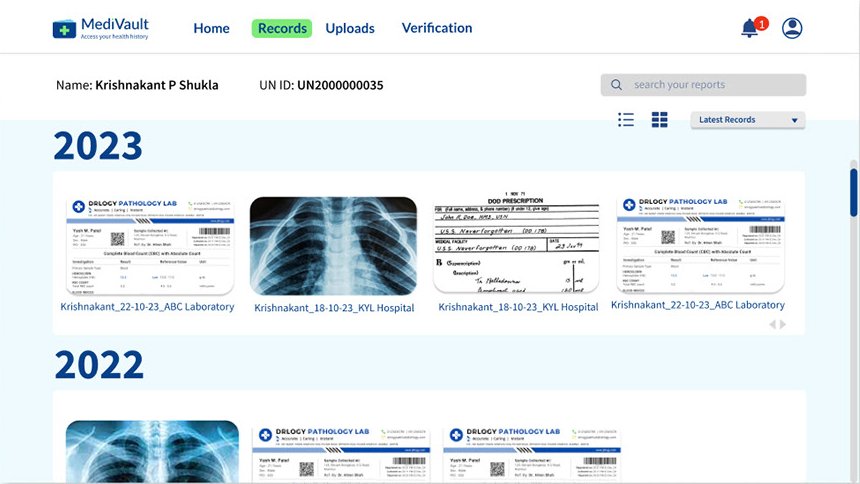
Records
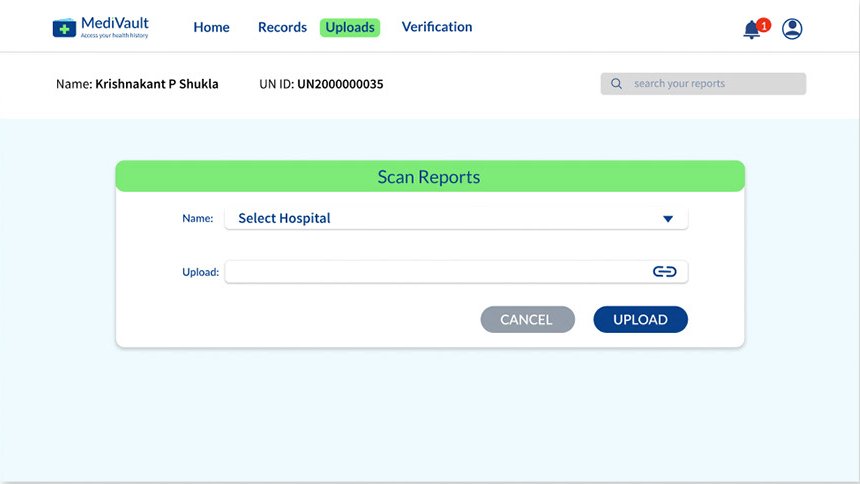
Uploads: hospital, lab
Verification
Notifications
Profile: nominee, help
Hospital
Records: scans, prescriptions, summaries
Check uploads
Verification
Notifications
Profile: help
Lab
Lab reports
Check uploads
Verification
Notifications
Profile: help
What it offers
01
Role-based routing
One login, three entirely different products, each tailored to its stakeholder.
02
Unified verification
Every record is authenticated before it enters, so the platform is a trusted clinical source, not just storage.
03
Cross-institution access
Patients, hospitals and labs looking at the same record, in the same place, for the first time.
04
Nominee access
A patient can name someone to reach their records for them, designed for emergencies.
05
Real-time alerts
Every upload, verification and update alerts the right person, closing the manual follow-up gap.
Design
Calm blues for trust, clear greens for done.
Visual design
#81EAFF
#4EC7F1
#084189
#0D9A3E
#7DE976
AaLatoPrimary
AaSource Sans ProSecondary
The screens
Three screens that carry the product. Pick one, then pick a feature to see where it lives.